




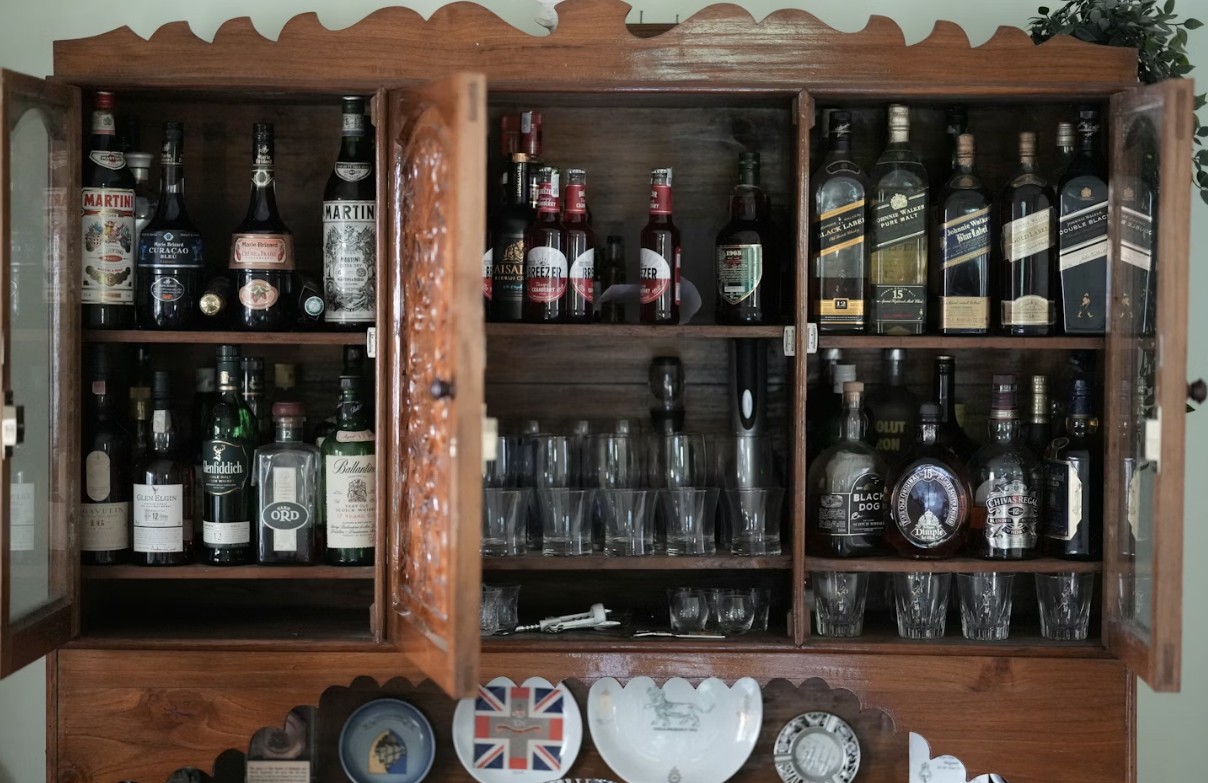
A home bar takes time to build. One bottle comes from a vacation, another from a wedding gift, and somehow you end up with a shelf full of bourbon, bitters, coupe glasses, shaker tins, and random bar tools you swear you’ll organize someday. That’s until it’s moving day and you have to pack up.
It’s at this point that most people realize a home bar is one of the hardest parts of a move. They suddenly remember that glass breaks easily, liquor bottles are heavy, and opened wine can leak into boxes. And if you toss everything together in one giant carton, you’re basically creating an expensive maraca.
The good news is that packing a home bar the right way isn’t complicated. You just need solid boxes, enough padding, and a little patience. In this article, we’ll guide you on how to pack a home bar for a cross-country move without breaking your bottles.
Start by Getting Rid of What You Don’t Need
Before wrapping anything, take inventory of your collection. Moving experts regularly point out that people pack far more alcohol than they actually want to keep. Old mixers, expired vermouth, nearly empty tequila bottles, and forgotten cream liqueurs usually aren’t worth hauling across the country. A few easy ways to cut down the load:
- Finish opened bottles before moving day
- Toss expired syrups and mixers
- Give away cheap liquor you rarely drink
- Donate duplicate glassware
- Recycle damaged bar tools
This also makes unpacking easier later. After all, no one wants to organize a new home bar around dusty triple sec starting in 2018. If you’re using one of the many long distance moving companies available for a cross-country relocation, reducing weight can also lower overall moving costs.
Gather the Right Packing Supplies
A home bar is not the place to use weak grocery-store boxes. Liquor bottles are dense and surprisingly heavy. Smaller, sturdy boxes work much better than oversized ones that can split open from the bottom halfway through the move. Here are the items that help most:
- Small heavy-duty moving boxes
- Packing paper
- Bubble wrap
- Corrugated dividers
- Strong packing tape
- Permanent markers
- Towels or soft cloths
- Foam wine shippers for valuable bottles
Double-taping the bottom of every box is smart. Many moving disasters start with box bottoms giving out under weight. If you still have original packaging for premium spirits or wine, keep it. Distillery boxes and wine sleeves are often designed specifically for transport.
Wrap Every Bottle Individually

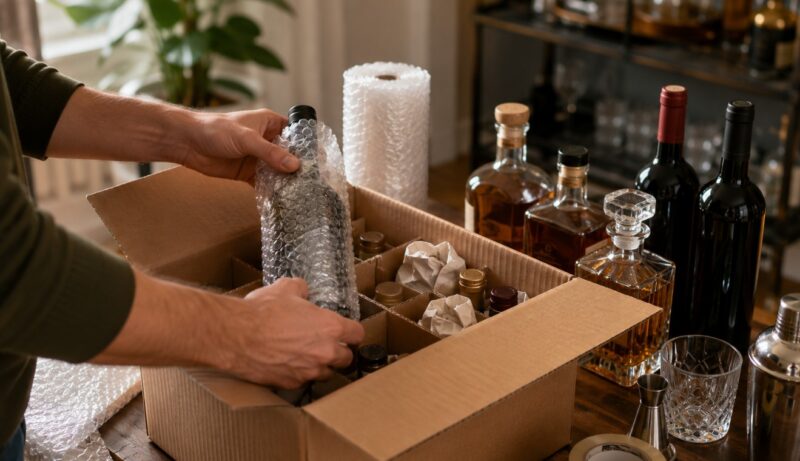
This part takes time, but it matters. Even when using divider boxes, every bottle should be wrapped separately. Glass rubbing against glass during a long drive is usually what causes cracks and chips. This simple method works best:
- Wrap the bottle in packing paper
- Add bubble wrap around the outside
- Tape it securely
- Keep the neck and base padded
For expensive bottles, add extra protection around the neck, as that’s often the weakest point. Opened bottles need extra attention too. Tape the cap or cork tightly before wrapping. A loose cork can ruin an entire box of bar tools in one leak. Some people try using clothes instead of packing materials. That can work in a pinch, but if a bottle breaks, your shirts are done too.
Always Pack Bottles Upright
Liquor and wine travel best standing upright. Packing bottles sideways increases the chance of leakage and pressure damage during a long haul. When loading the box:
- Place heavier bottles at the bottom
- Fill empty spaces with paper or towels
- Keep everything snug
- Avoid overpacking
After loading the box, do the shake test. All you need to do is gently move the box side to side. If you hear clinking, add more padding; bottles shouldn’t shift at all. For wine collectors, temperature is important as well. Heat can damage wine faster than people realize, especially during summer moves. Some cross-country moving companies offer climate-controlled options for delicate collections.
Don’t Forget Your Glassware
Most cocktail fans worry about bottles first, but stemware usually breaks faster. Coupe glasses, Nick and Nora glasses, champagne flutes, and crystal mixing glasses all need individual wrapping, so you should never stack them directly together. The following are a few rules that can ensure safety:
Wrap Glasses One by One
Stuff the inside lightly with packing paper first, then wrap the outside fully. Thin stems need extra padding because they snap easily under pressure.
Pack Glasses Upright
A lot of people lay wine glasses sideways, and that’s risky. Keeping glasses upright reduces pressure on delicate stems and rims.
Use Dividers if Possible
Cell boxes help prevent glasses from knocking into each other during transport. If you don’t have dividers, use towels or crumpled paper between every piece. Be sure to label everything clearly. “FRAGILE” and “THIS SIDE UP” might seem obvious, but movers handle hundreds of boxes during a busy move.
Protect Your Bar Tools and Equipment
Cocktail gear gets scratched up easily during moves. Shaker tins can dent, Hawthorne strainers can bend, bar spoons can twist, and marble boards can chip. Even espresso machines can take damage if they slide around inside a truck. The safest move is to wrap tools separately and group them by type. For example:
- Put jiggers and strainers together
- Wrap mixing glasses individually
- Remove detachable parts from grinders or machines
- Tape drawers shut on bar carts
- Remove glass shelves before transport
Bar carts deserve special attention because they combine metal, wood, wheels, and glass in one awkward piece of furniture. If the cart has removable shelves or casters, take them off first. It makes transport much safer.
Endnote
Packing a home bar for a cross-country move takes more effort than boxing up clothes or books, but it’s worth doing carefully. Good bottles, quality glassware, and favorite cocktail tools are expensive to replace, and some items carry memories you can’t buy again.
The safest approach is simple: use sturdy boxes, wrap everything individually, keep bottles upright, and leave no empty space inside the box. Do that, and your home bar should arrive ready for the first drink in your new place without the sound of broken glass waiting inside the boxes.
