

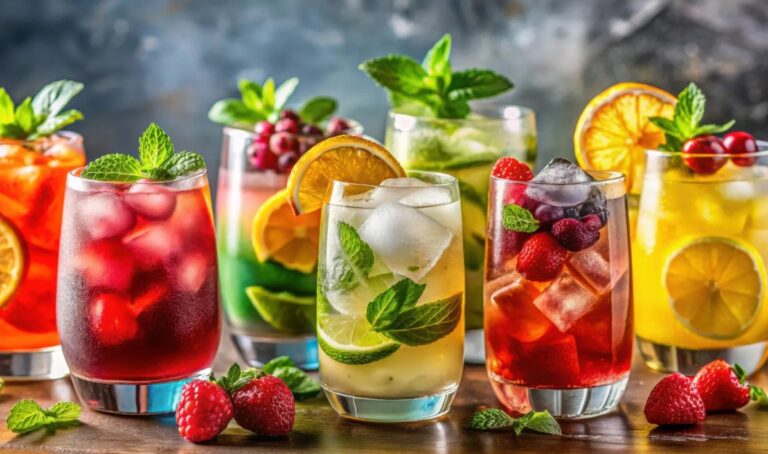
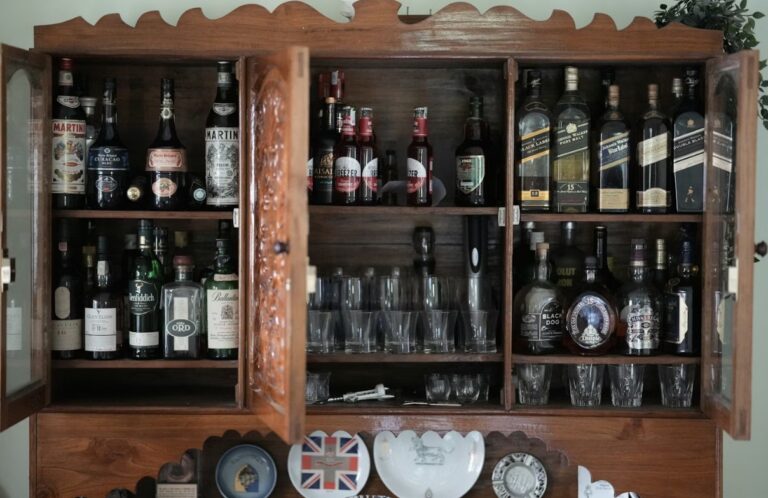
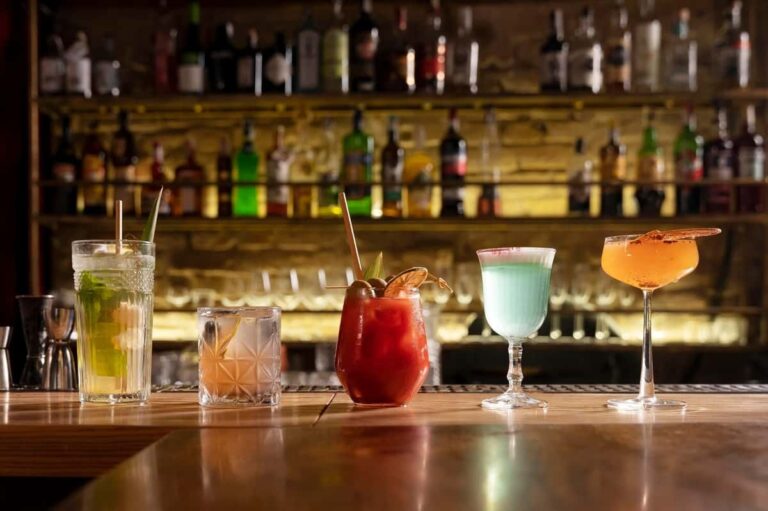
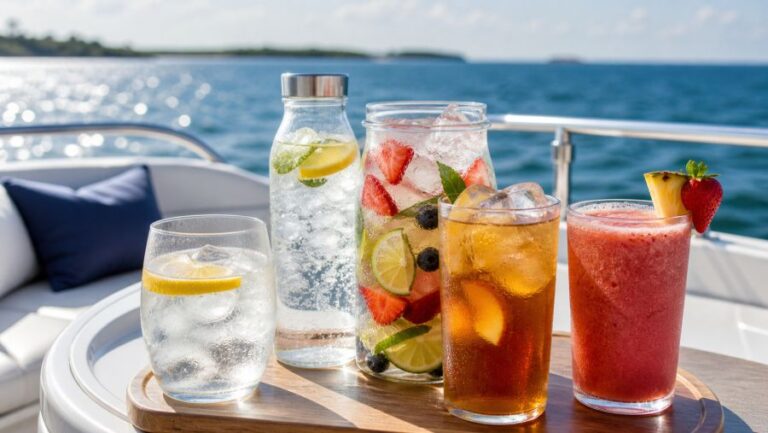

A party can look fully prepared before the first guest walks in. Snacks may be out, the playlist may be ready, and the bar may look stocked, but cocktails can quickly turn hosting into nonstop work.
Once guests start asking for drinks, the host can end up measuring, shaking, straining, wiping counters, and searching for clean tools instead of enjoying the party.
A better drink plan should keep guests relaxed without trapping one person behind the bar all night.
Strong results depend on choosing batch-friendly cocktails, using accurate measurements, planning dilution, storing drinks correctly, and finishing each glass with small details that keep it fresh.
So how can you prep cocktails for a party without spending the whole night making drinks?
Pick Cocktails That Batch Well
Batch-friendly cocktails usually share one trait: stable ingredients. Spirit-forward drinks made mostly with liquor, vermouth, bitters, and liqueurs are usually easiest because they hold up well and do not depend on fragile fresh items.
Strong party choices include drinks that are stirred, boozy, and built with ingredients that can sit together well:
- Negroni
- Boulevardier
- Manhattan
- Martini
- Old Fashioned
- Sazerac
- Vieux Carré
- Rob Roy
- Martinez
- Hanky Panky
Stirred drinks made only with alcoholic ingredients are especially simple because they can be mixed, chilled, and poured with very little last-minute work.
A Negroni is one of the easiest drinks to scale because it uses equal parts gin, Campari, and sweet vermouth.
For a large batch, you can multiply that ratio by your guest count or combine equal bottle amounts of each ingredient. Equal-part math lowers the risk of mistakes and makes refilling a bottle or pitcher simple.
Larger parties call for simpler drink plans. A small dinner might handle three complicated options, but a packed apartment should not rely on several labor-heavy cocktails.
One or two dependable batch drinks will usually make guests happier than a full bar that keeps the host busy all night.
Certain cocktail styles need more caution because their texture or flavor changes quickly:
- Lemon and lime drinks can turn more bitter as juice sits.
- Soda, tonic, Champagne, Prosecco, and sparkling wine lose carbonation when mixed too early.
- Egg white drinks can go flat and may develop an unpleasant sulfur smell.
- Milk and cream drinks can curdle, especially when mixed with acidic ingredients.
When a recipe includes an ingredient that should be held back, timing matters as much as measuring.
A Pomodoro method timer can help you keep those final additions organized, such as adding citrus close to pouring time, opening bubbles only when guests are ready for drinks, or leaving egg whites and dairy out of the main batch.
Decide How Much to Make
Good batching starts with guest count and drinking pace. A practical planning formula keeps the math simple:
- Number of guests multiplied by expected cocktails per person equals total drinks.
- Six guests plus the host equals seven people.
- Seven people at two cocktails each equals 14 drinks.
Two batching methods work well. One method starts with the number of drinks you need. Another starts with the container you want to fill, such as a 750 ml bottle, pitcher, or carafe.
Batching by drink count is easiest when your guest list is clear. Start with the single-drink recipe, multiply every ingredient by the number of drinks, then decide which containers can hold the total volume.
Batching by container size is useful when you want a cocktail to fit neatly into a specific bottle. A 750 ml bottle holds about 25 1/4 ounces. Many cocktail pours land around 90 to 100 ml, so knowing your glass size helps prevent skimpy pours or oversized drinks.
For container-based batching, use container capacity as the starting point:
- Calculate the single-drink volume.
- Calculate your container volume.
- Divide container volume by single-drink volume.
- Multiply each ingredient by that number.
A 3-ounce Martini gives a simple example. A 750 ml bottle holds about 25 1/4 ounces. Since 25 1/4 divided by 3 is roughly 8, one standard bottle can hold about eight Martinis before added water changes the final volume.
Container capacity matters before any mixing begins. Planning around bottles and pitchers is much easier than discovering halfway through that the batch has nowhere to go.
Gather Simple Tools Before Mixing
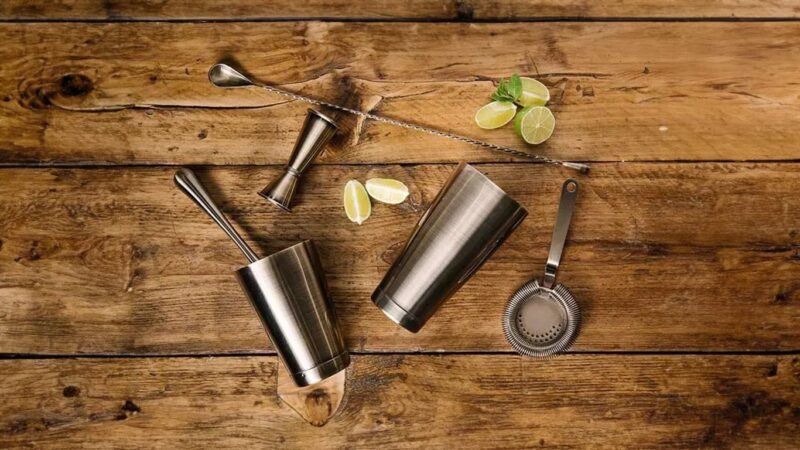
Cocktail batching does not require professional bar gear. Accurate measurements and clean containers matter far more than fancy tools.
Useful gear should help you measure accurately, transfer cleanly, and store each batch safely:
- Kitchen scale
- Measuring jug or liquid measuring cup
- Jigger or small measuring cup
- Funnel
- Long-handled spoon
- Calculator
- Clean bottles
- Empty wine bottles
- Empty spirits bottles
- Pitchers or carafes
- Masking tape and marker
- Fridge or freezer space
Clean, recently emptied bottles are especially useful. Standard glass bottles are easy to chill, easy to label, and easy to pour.
When a finished single drink is under 3 ounces before dilution, eight batched drinks can usually fit in a standard 750 ml glass bottle.
A funnel saves mess when transferring cocktails into narrow bottles. Masking tape and a marker help keep batches organized.
A calculator helps prevent small recipe errors that can grow into big balance problems at party scale.
Careful measuring is nonnegotiable. A quarter-ounce mistake in one drink might not ruin much, but that same mistake multiplied by 14 or 24 drinks can make the whole batch too sweet, too dry, too strong, or too bitter.
Handle Cocktail Math Without Overcomplicating It
Start with the original single-drink recipe. Multiply each ingredient by the number of drinks needed.
Exact math works best for drinks with uneven proportions, such as Martinis, Manhattans, Rob Roys, and Old Fashioneds. Ratio math works best for equal-part drinks, especially a Negroni.
A Martini for 14 drinks might look like this:
- 2 1/2 ounces gin multiplied by 14 equals 35 ounces gin.
- 1/2 ounce dry vermouth multiplied by 14 equals 7 ounces dry vermouth.
Bitters need a lighter hand. Do not automatically multiply bitters by the full drink count. Bitters can become more pronounced as a batch sits, so about half of the fully scaled amount is usually safer.
One dash of bitters is approximately 0.03 ounces. That detail helps when scaling very large batches or when you want a more exact approach than counting dozens of dashes.
A simple party method is to work in sets of eight drinks. Eight drinks often fit neatly into carafes or empty liquor bottles, and those containers can go into the fridge, freezer, or an ice bath until guests arrive.
Always taste before locking in the final batch. Correct math can still need a small adjustment once the drink is cold, diluted, and poured in the style you plan to use.
Plan for Dilution
Dilution is part of a cocktail, not a mistake. Shaking or stirring with ice adds water while chilling the drink. Added water softens alcohol, opens flavors, and helps aromas come through.
lem
Spirit-forward stirred drinks can be pre-diluted by adding water directly to the batch.
Martinis, Manhattans, Negronis, and Old Fashioneds are good candidates. Once water is included, a chilled bottle can be poured straight into a glass.
Accurate dilution starts with one test drink:
- Measure or weigh the cocktail before stirring or shaking.
- Stir with ice for at least 30 seconds.
- Strain well.
- Measure or weigh again.
- Use the difference as the amount of water added by stirring.
- Multiply that water amount by the number of drinks in the batch.
Add that amount of water to the bottle or pitcher along with the other ingredients.
When batching by container size, treat the post-dilution volume as the final drink volume. Water counts as an ingredient, so it must be included in the total capacity.
Shaken drinks need more care. Shaking adds dilution and chill, but it also creates texture. A velvety Daiquiri or Whiskey Sour gets part of its character through shaking, and plain added water cannot fully copy that texture.
A smart compromise is to batch all ingredients except water, then shake each drink with ice when pouring.
Another option gives a little bar-style flair with less work. Batch the ingredients without dilution, then stir or shake with ice only at pour time.
Taste the batch in the same format guests will drink it. Try it over ice if it will be poured on the rocks. Try it straight out of a chilled bottle if it will be poured up.
Taste it cold because room-temperature alcohol tastes stronger and less balanced.
Batch the Work, Not the Fun
A batched cocktail program should not remove the pleasure of cocktails. It should remove repetitive measuring, shaking, straining, and cleanup during the party.
Pick drinks that batch well. Keep the menu focused. Measure carefully. Plan dilution. Add citrus and bubbles at the right time. Store and label every container clearly.
A well-planned batch lets guests enjoy a proper cocktail while the host enjoys the actual party.
