



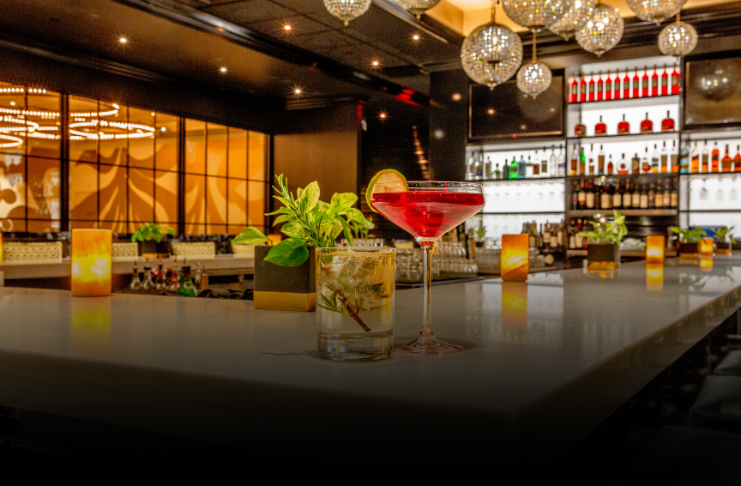
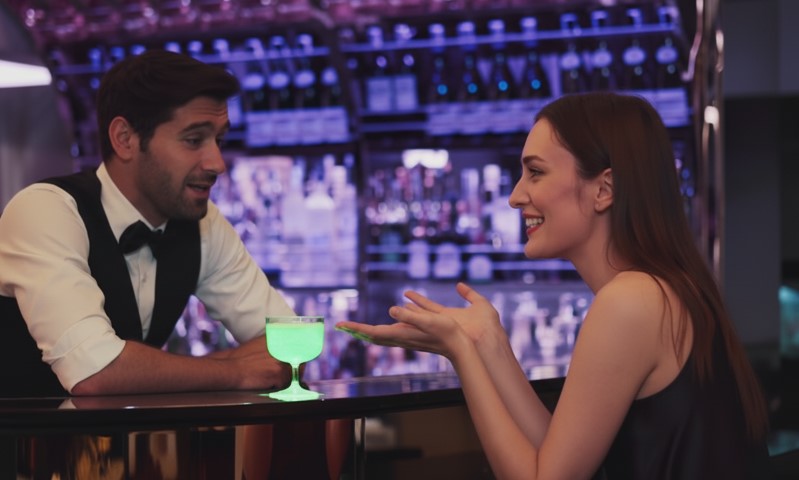
An Angel Shot is an informal safety signal used in bars and restaurants to discreetly alert staff that a guest feels unsafe, threatened, or harassed and needs help without drawing attention.
The phrase is spoken as a drink order, allowing the person to communicate distress in a public setting where openly asking for assistance might escalate risk.
In most venues that recognize it, staff respond with predefined actions that can range from checking on the guest and separating them from another patron to calling security, arranging a safe ride, or contacting police, depending on the variant requested.
Angel Shot Variants and What They Mean
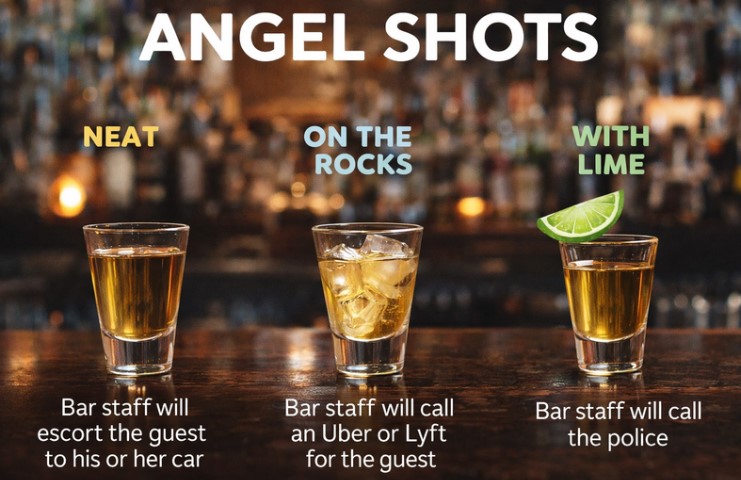
While the core idea is consistent, many bars recognize variants that communicate urgency. The table below summarizes common interpretations. Actual responses depend on venue policy.
| Phrase Ordered | Typical Meaning | Common Staff Response |
| Angel Shot | I feel unsafe and need assistance | Staff check in, create separation, offer escort or support |
| Angel Shot with Ice | I need help getting out now | Arrange a safe exit, call a ride, and involve security |
| Angel Shot Neat | Call law enforcement | Contact police, keep the guest safe and discreet |
| Angel Shot with Lime | I am being followed or threatened | Monitor the situation closely, provide escort, and documentation |
Not every venue uses every variant. Some deliberately keep one simple protocol to reduce confusion during busy service. For that reason, guests should not assume universal recognition of specific modifiers and should prioritize clarity and safety over exact phrasing.
Where the Angel Shot Came From and How It Spread
The Angel Shot gained public attention in the mid-2010s as part of broader nightlife safety conversations, particularly in the United States. Its spread was organic rather than centralized.
Early adoption came from individual bars and local advocacy groups responding to reports of harassment and assault in nightlife settings.
Social media amplified awareness as patrons shared photos of restroom posters and bartenders discussed training practices.
This timing coincided with increased emphasis on bystander intervention and workplace harassment prevention across hospitality.
Industry groups and local governments promoted training that empowered staff to intervene early, document incidents, and coordinate with security.
The Angel Shot fit neatly into these efforts because it gave guests agency while minimizing confrontation.
What Staff Are Trained to Do After an Angel Shot
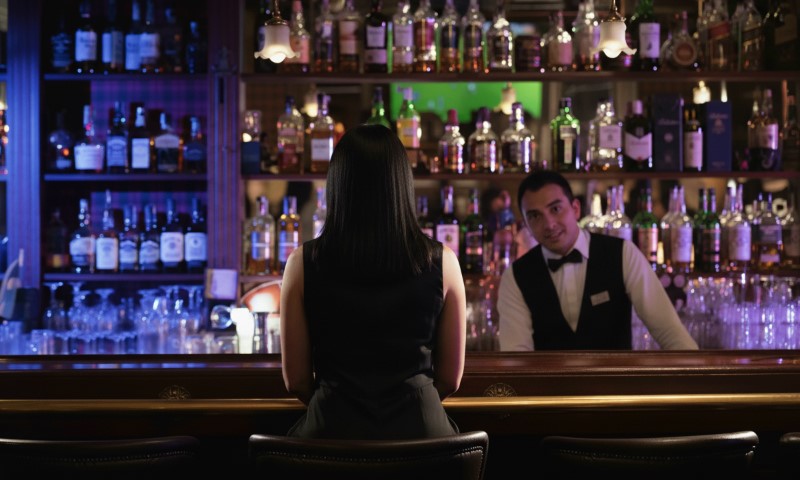
Effective response depends on preparation. In venues that train for it, staff are instructed to acknowledge the request neutrally, avoid tipping off other patrons, and assess immediate risk.
Actions often include moving the guest to a staff-only area, switching bartenders to create distance, or asking a routine-sounding question to confirm needs. Documentation is emphasized in higher-risk situations, especially if law enforcement is contacted.
The table below outlines typical response steps and their purpose.
| Step | Purpose | Notes |
| Quiet acknowledgment | Confirm the signal | Avoid alerting others |
| Risk assessment | Determine urgency | Observe behavior and proximity |
| Separation | Reduce the immediate threat | Seat change, restroom check, staff escort |
| Support action | Provide help requested | Ride, security, police |
| Documentation | Protect the guest and the venue | Time, staff involved, actions taken |
How Common Is the Angel Shot and Does It Work?
There is no national registry tracking Angel Shot usage, but surveys and training reports indicate growing adoption in urban nightlife hubs.
Hospitality training providers report increased demand for harassment prevention modules since 2017, with code-word systems frequently included.
While formal outcome data are limited, qualitative reports from bartenders and venue managers consistently describe successful de-escalation and safe exits when the signal is used appropriately.
Effectiveness depends on three variables: staff awareness, clear protocols, and guest understanding that recognition is not universal.
Where all three align, the Angel Shot serves as a low-friction safety tool that can interrupt escalating situations without public confrontation.
Limitations and Common Misunderstandings
The Angel Shot is not a legal mandate and not a guarantee. Some venues have never heard of it, others recognize only the basic phrase, and a few have retired it in favor of different systems.
Overexposure can also dilute effectiveness if the phrase becomes widely known to potential aggressors. For that reason, many venues rotate or localize their signals and emphasize staff judgment over rigid scripts.
Another misunderstanding is that the Angel Shot replaces emergency services. It does not. It is a communication shortcut within a specific environment.
If immediate danger exists and staff are unavailable, contacting emergency services directly remains critical.
Angel Shot Compared With Other Safety Signals
Different regions and venues use different tools. Comparing them clarifies where the Angel Shot fits.
| System | Where Used | Strengths | Constraints |
| Angel Shot | Bars and restaurants | Discreet, verbal, low barrier | Not standardized |
| Ask for Angela | UK nightlife | Clear national campaign | Requires signage and training |
| Safe Word Cards | Clubs and festivals | Visual and multilingual | Less discreet |
| App-Based Alerts | Events and campuses | Direct documentation | Requires phone access |
Each approach reflects local culture, staffing models, and risk profiles. Many venues layer tools rather than relying on a single signal.
Practical Context for Guests and Venues
View this post on Instagram
From a guest perspective, the Angel Shot is most useful when staff are nearby and attentive. From a venue perspective, its value lies in empowering employees to intervene early with clear authority.
Training that includes scenario practice, escalation thresholds, and documentation standards is what turns a phrase into an effective safety measure.
In reporting on nightlife safety over the years, I have seen the same pattern repeat: tools work when they are simple, rehearsed, and supported by management.
The Angel Shot meets those criteria in places that commit to it, and it fails where it is treated as a poster rather than a protocol.
Bottom Line
An Angel Shot is a discreet code drink used in some bars and restaurants to signal that a guest needs help because they feel unsafe. Its power comes from blending into normal service, allowing staff to respond without escalating tension. It is not universal, not regulated, and not a substitute for emergency services, but where it is trained and understood, it provides a practical, low-visibility way to interrupt harassment and prioritize guest safety.
